
How the programme works in practice
Built to fit alongside real businesses
The Future Food Programme is intentionally designed to work alongside the pressure of day-to-day operations, not in competition with them.
This is a critical distinction. Many innovation programmes fail not because the thinking is wrong, but because the process is unrealistic & ends up burdening the team they’re meant to support.
They assume teams can drop everything and rely on momentum that quickly gets lost once operational reality sets in.
Future Food is built with a different assumption. That leadership teams are time poor. That organisations are complex. That decisions need to be made without bringing the business to a halt.
The programme respects time pressure.
It recognises organisational and political complexity.
It does not rely on clients “finding time” to make it work.
Instead, it is structured so that the Future Food team does the heavy lifting, while clients engage at the points where their input has the greatest impact. Direction setting. Challenge. Decision-making.
This makes the process not only more efficient, but more effective.
Why process matters in FMCG innovation strategy
In food and drink, innovation is rarely constrained by ideas. It is constrained by alignment, execution, governance, and confidence.
Without a clear innovation strategy process, even strong ideas struggle to move forward. Projects stall. Decisions are revisited. Stakeholders lose confidence. Investment stops.
A robust innovation strategy process in FMCG must do three things well:
Reduce uncertainty at each stage
Enable confident decision-making
Be agile enough to adapt to new information & change
The Future Food Programme is designed explicitly around these principles.
A staged, structured innovation programme structure
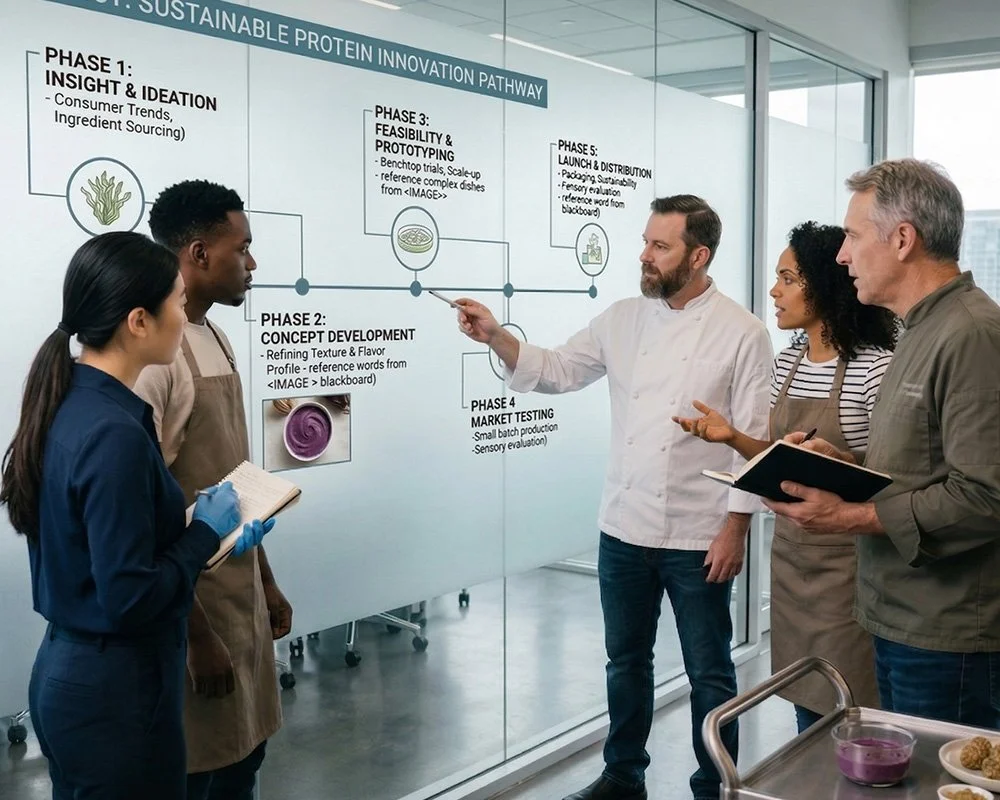
The programme follows a customisable but staged structure that builds logic and confidence step by step. Each phase has a clear purpose, defined outputs, and a specific role in reducing risk.
Importantly, stages are not rushed or skipped. Each one builds on what came before, ensuring that decisions are grounded rather than speculative.

Stage 1: Scoping and alignment
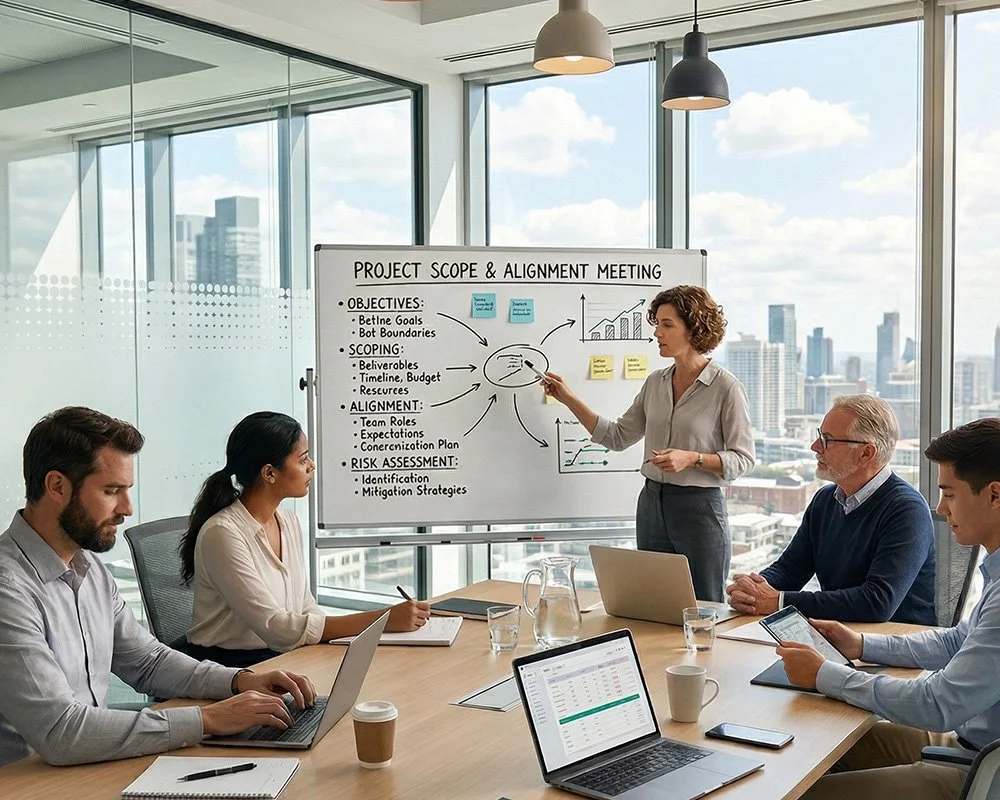
The programme begins with scoping and alignment.
This stage is often underestimated, but it is one of the most important parts of the entire process. Many innovation initiatives struggle because objectives are unclear or misaligned from the start.
During scoping, the Future Food team works closely with cross functional senior stakeholders to explore:
Problem definition & barriers to innovating
What success looks like & over what horizon
Strategic constraints and non-negotiables
Categories, channels, capabilities & customers in scope
Commercial ambition and risk appetite
This stage also establishes how decisions will be made, who needs to be involved, and how governance will work throughout the programme.
The outcome is a clear, shared understanding of what the programme is trying to achieve and what it is not.
This alignment reduces friction later and prevents the process from drifting.
Stage 2: Discovery
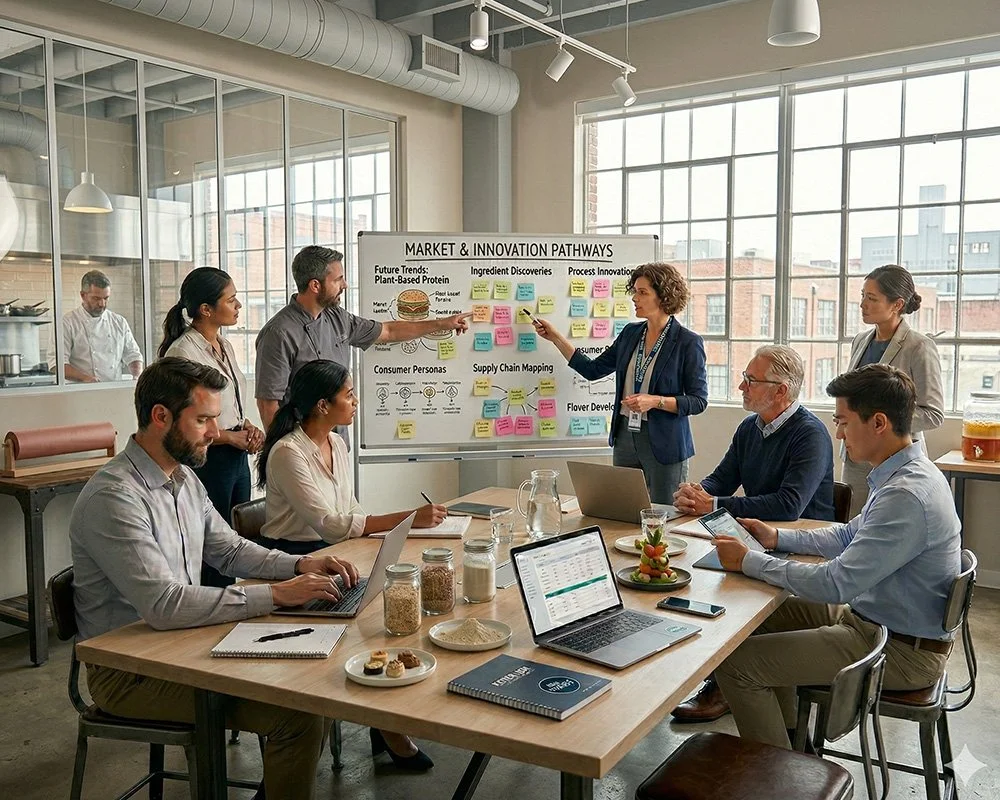
Discovery is where the programme brings together everything the business already knows and everything it needs to consider.
Rather than commissioning large volumes of new research by default, the Future Food team synthesises existing inputs & identifies potential knowledge gaps. This typically includes:
Consumer and shopper insight
Category and market data
Trend and foresight intelligence
Customer relationships & JBPs
Incumbent pipeline & investment strategy
Operational capabilities and asset led constraints
The goal of discovery is to create deep understanding of what your business knows today & shared alignment in what’s important.
Insight is reviewed through a single lens, allowing patterns, tensions, and opportunities to emerge. Contradictions & hypothesis are explored rather than ignored. Assumptions are uncovered & understood.
This stage is critical for moving the organisation from fragmented knowledge to a shared perspective.
Stage 3: Development
In the development stage, insight is translated into strategic foundations.
This is where growth territories are defined. These territories represent the strategic spaces where the business has a genuine opportunity to grow, grounded in:
Real consumer needs
Trend foresight
Category drivers
Brand and business strengths
Commercial viability
Development bridges the gap between insight and action. It provides a framework that guides subsequent ideation and prevents creativity from becoming unfocused. The skill here is to develop evidence-based territories with enough elasticity to ideate from whilst retaining clear purpose. For leadership teams, this stage is often where confidence starts to build. Decisions feel more grounded. The path forward becomes clearer.
Stage 4: Ideation
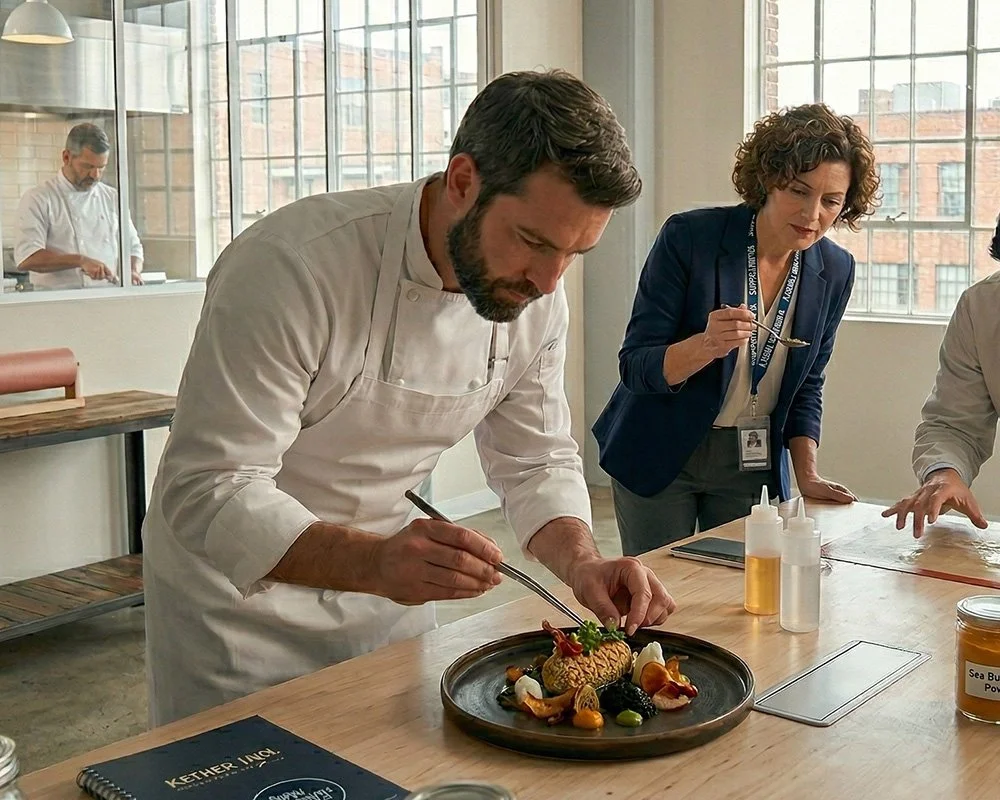
Ideation within the Future Food Programme is deliberately anchored to the strategic territories we create.
This ensures that ideas are not generated in isolation, but in direct response to agreed priorities and are backed up by real insight.
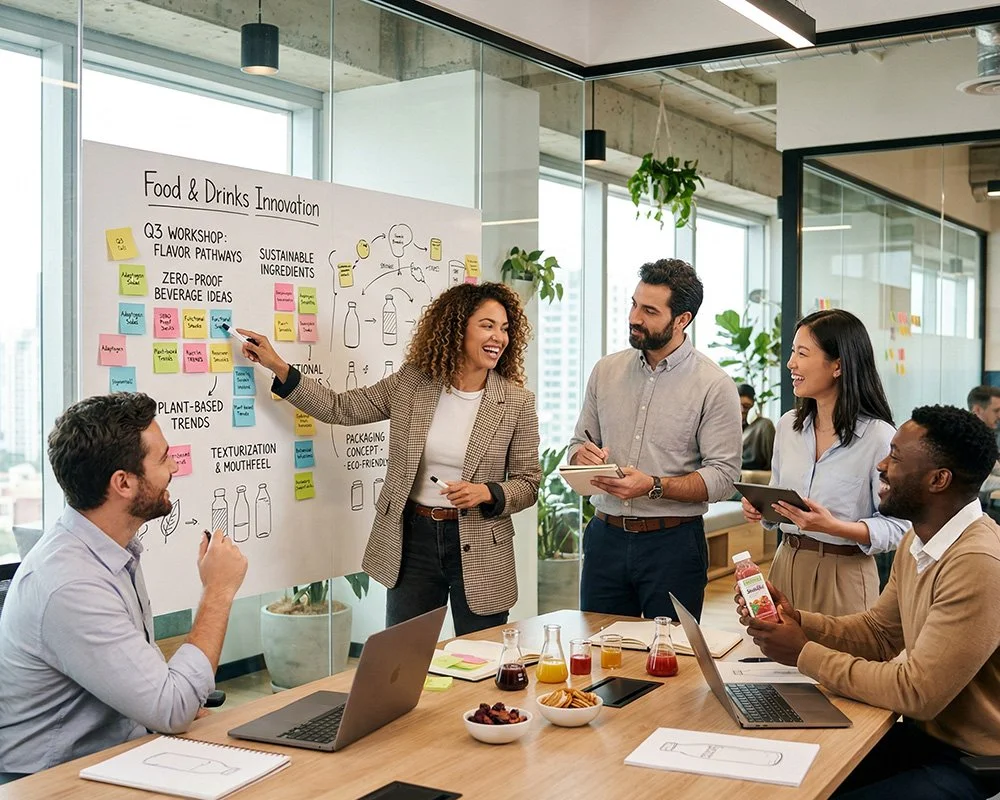
The ideation process brings together cross-functional perspectives and relevant, external provocateurs to apply creativity & problem-solving skills to each territory. The aim is to explore opportunities broadly enough to encourage stretch but ensuring that each territory has a purpose & links back to our overall commercial objectives.
Because the strategic context is clear, ideation becomes more productive. Teams spend less time debating direction and more time developing meaningful opportunities.
Our facilitation team are all experts in developing stimulus, ensuring rigour & nurturing foundational ideas into full formed propositions & concepts.
Stage 5: Validation
Validation is where innovation governance FMCG organisations need most often breaks down.
Ideas tend to move forward because they feel exciting in the moment, not because they are robust. Energy & momentum can carry forward even the worst of ideas with the best intentions.
The validation stage addresses this directly.
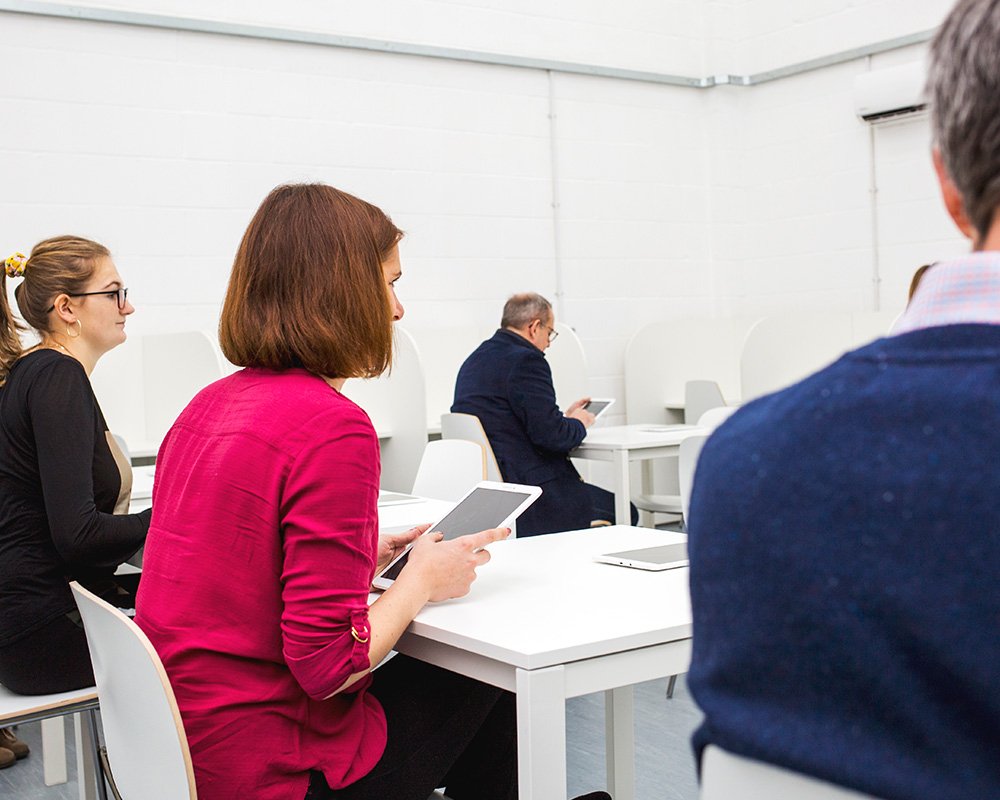
Concepts and opportunities are tested with appropriate rigour to assess:
Consumer desirability
Commercial viability
Operational feasibility
Validation is proportionate, not excessive. The aim is not to eliminate risk entirely, but to reduce uncertainty to a level that allows confident decision-making. Our approach is to blend traditional research methodologies with proprietary IP & consultative expertise to pull apart each proposition & map it against a time & investment horizon.
Outputs from this stage allow leadership teams to prioritise based on evidence rather than opinion.
Stage 6: Activation
Activation is about translating strategy into execution.
Too often, innovation programmes end with ideas and frameworks, leaving teams unsure how to move forward. Future Food is the beginning of your innovation journey, not the end. By embedding leaders throughout, decision making is baked into the process.
The activation stage focuses on:
Clear propositions
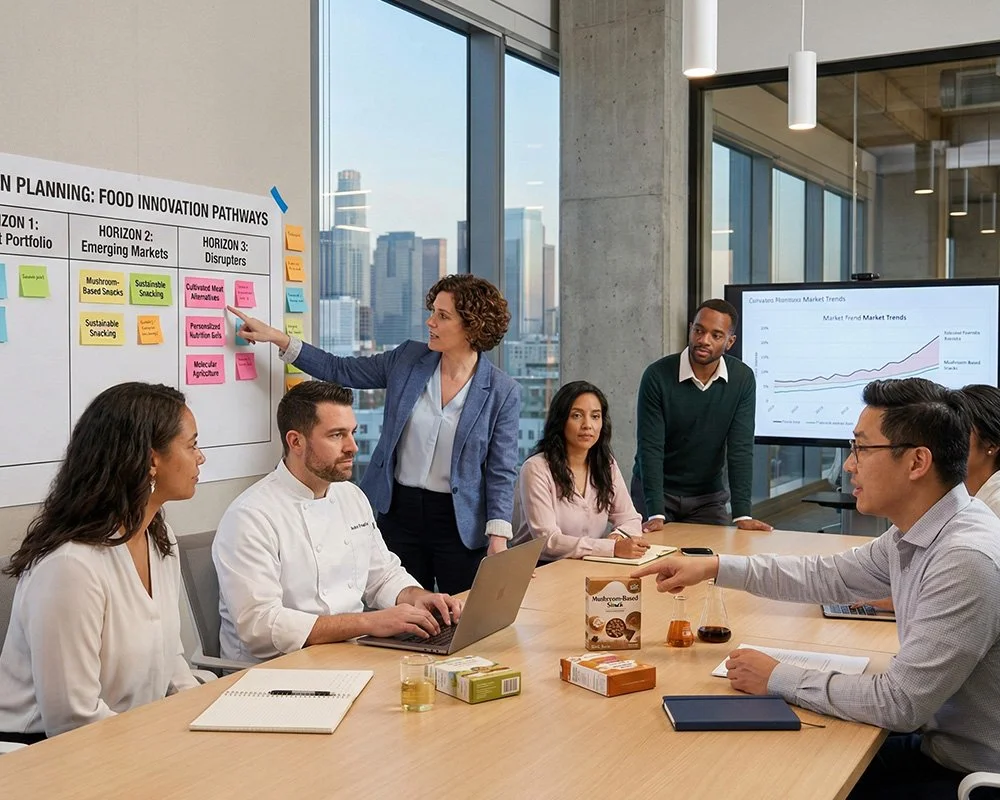
Prioritised roadmaps & horizon planning
Ownership and accountability
Recommendations for further exploration or project support
We ensure that outputs are actionable and fully integrated with internal processes. Strategy becomes something that can be delivered, not just discussed.
This is also the stage where our entrepreneurial team can take ownership of the pipeline. Many of our clients choose to embed our program directors into their business for a transitional period to ensure the fastest ROI possible.
Each stage reduces uncertainty
One of the defining strengths of the innovation strategy process FMCG leaders experience through Future Food is how uncertainty is reduced at each stage.
Early ambiguity is embraced, acknowledged and explored.
Assumptions are tested progressively & robustly.
Decisions are staged rather than forced prematurely.
This builds confidence incrementally rather than relying on a single leap of faith.
Client involvement without overload
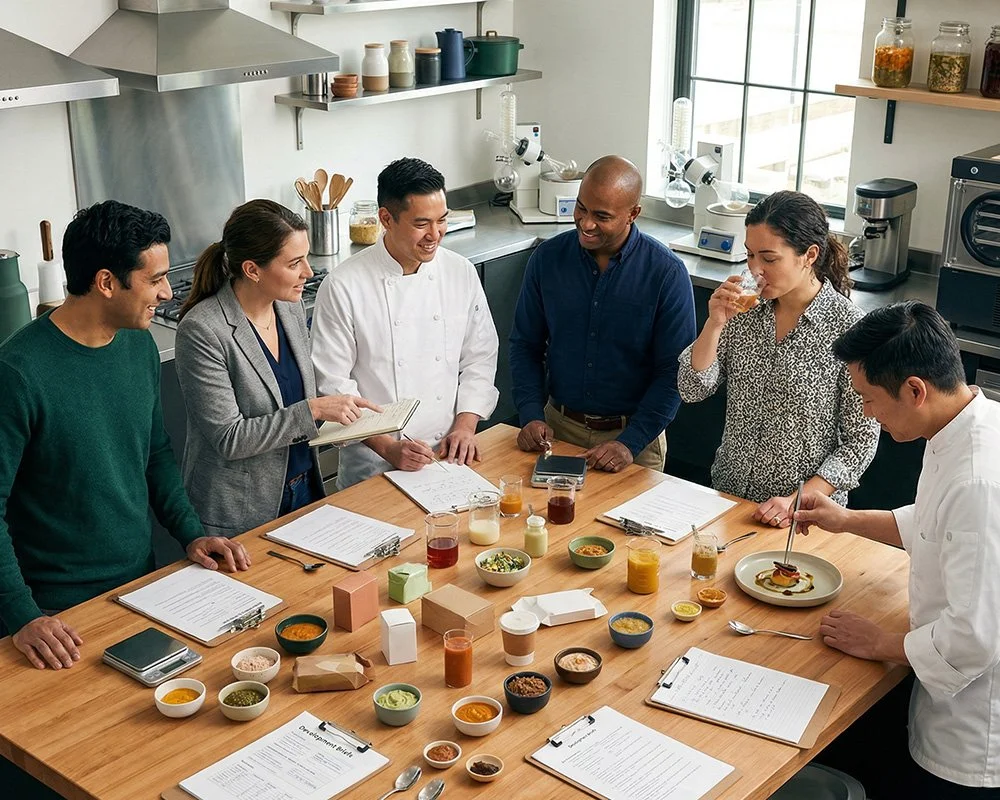
Client involvement is focused and purposeful.
Leadership teams are engaged where their input matters most. Setting direction. Challenging assumptions. Making decisions.
They are not asked to manage the process or develop all of the inputs. The Future Food team handles analysis, synthesis, and administration.
This balance ensures that the programme benefits from senior insight without becoming burdensome.
A food innovation consultancy process built for governance
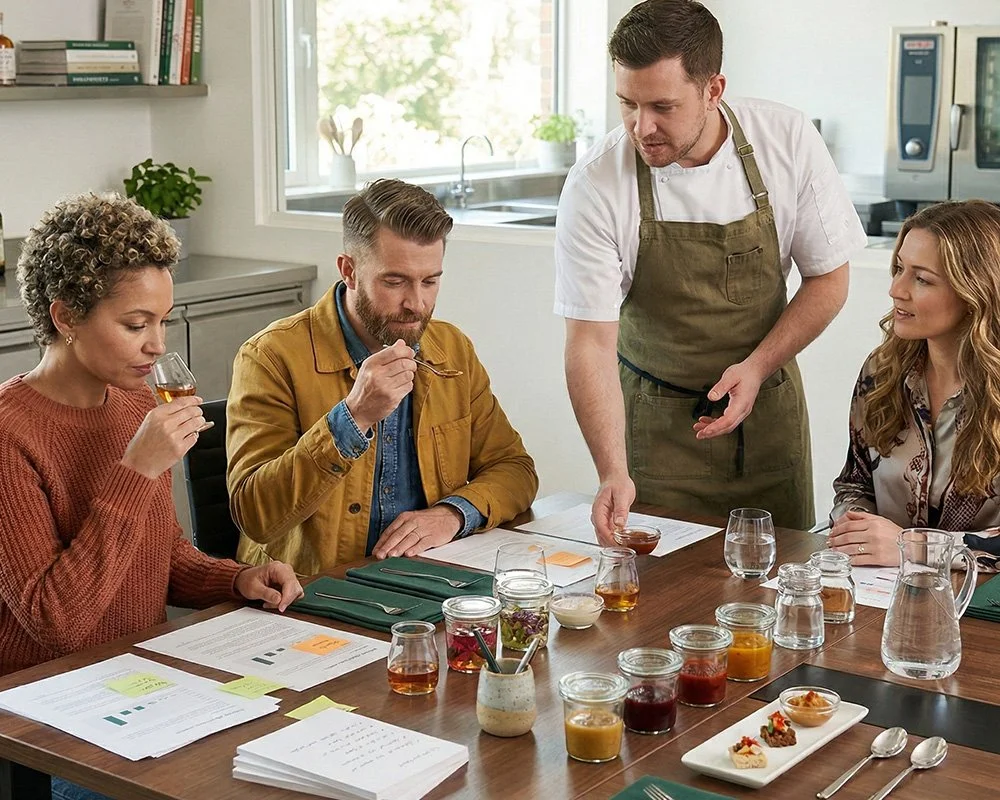
The Future Food Programme is designed to fit within existing governance structures.
It integrates seamlessly into your current process.
It provides clarity & an executable plan.
It aligns cross functional teams to one growth future.
This makes it easier for organisations to adopt outputs and maintain momentum after the programme concludes.
What changes in practice
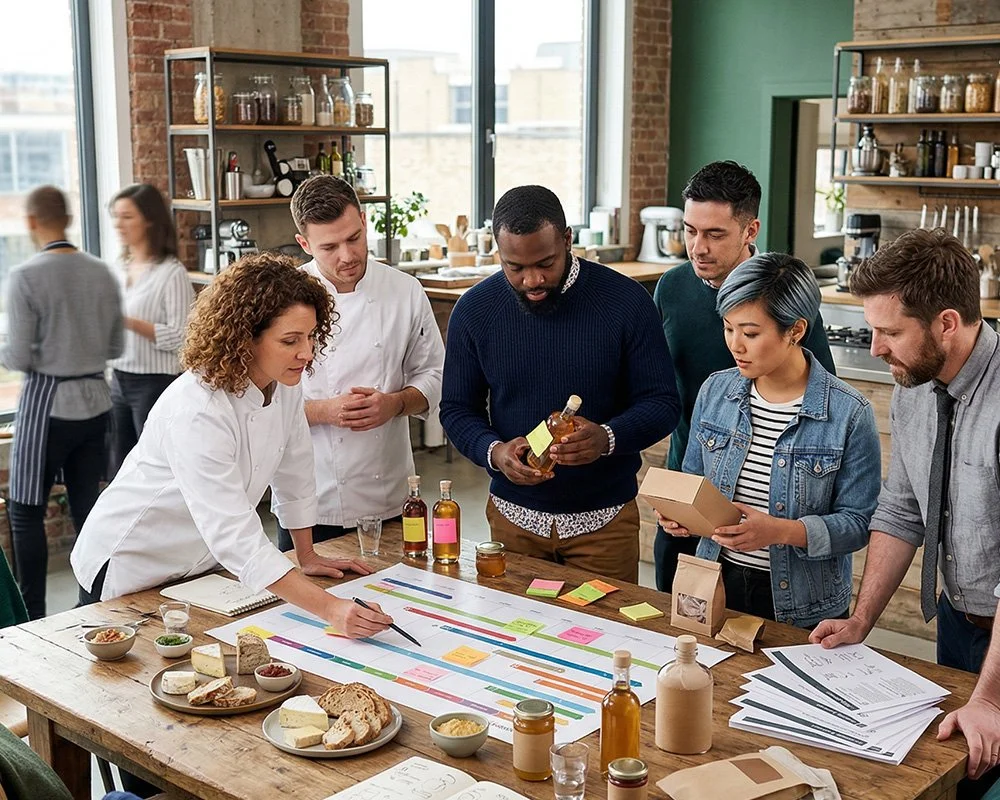
In practice, clients often report that the biggest shift is not the content of the outputs, but how decisions are made.
Innovation discussions become more focused.
Debate becomes more constructive.
Confidence replaces hesitation.
This is the value of a well-designed innovation programme structure.
A process designed for the long term
The Future Food Programme is not designed as a one-off intervention. It is designed to embed a way of working that continues beyond the programme itself.
By the end, organisations have not just a strategy, but a clearer, more confident approach to innovation led growth.
Many clients use Future Food as a catalyst for change but end up developing a long lasting partnership solution that ensures continued momentum & results.
That is how the programme works in practice.

We’d love to chat.
Get in touch with our friendly team and let’s see how we can help propel your business forward.